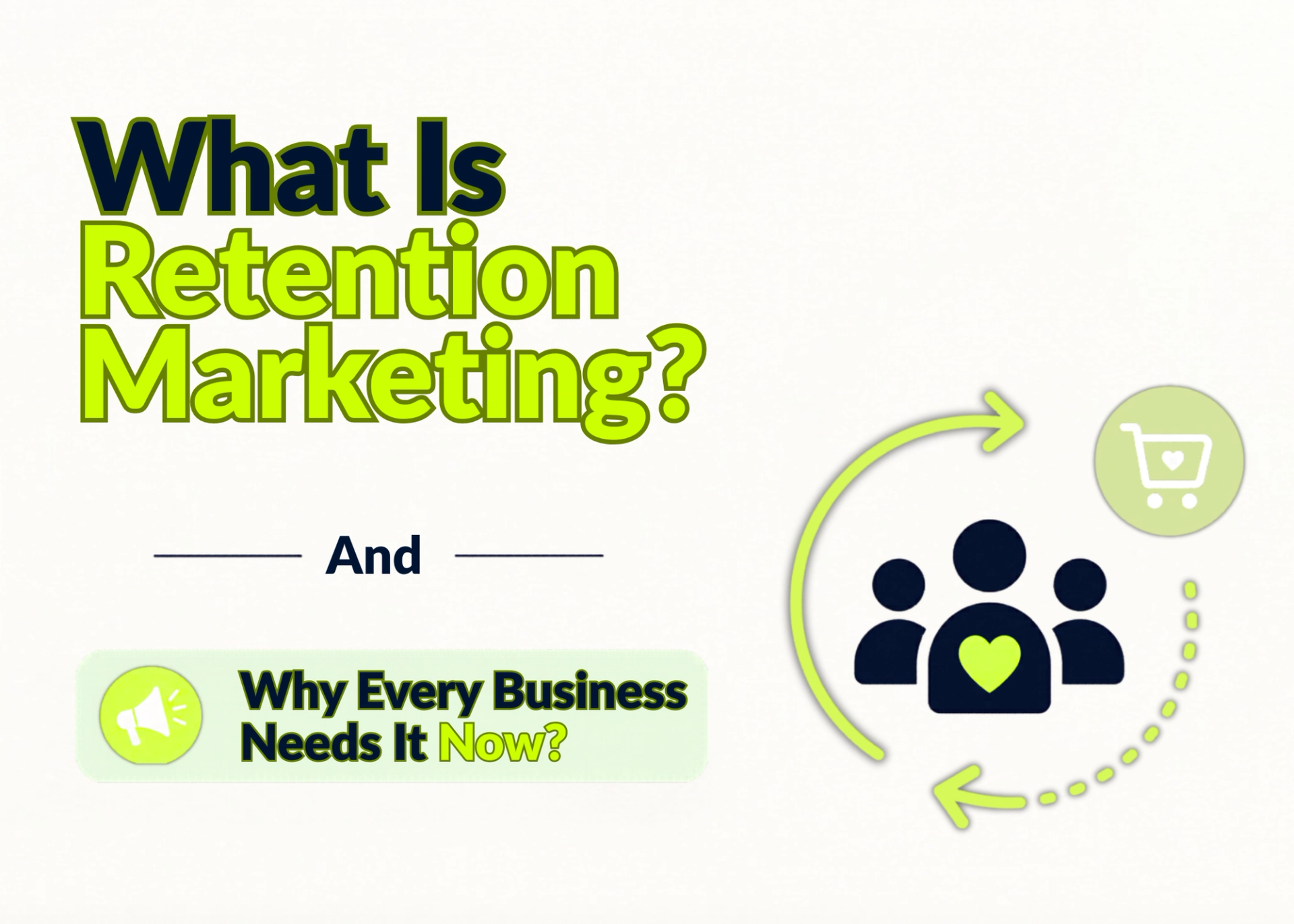
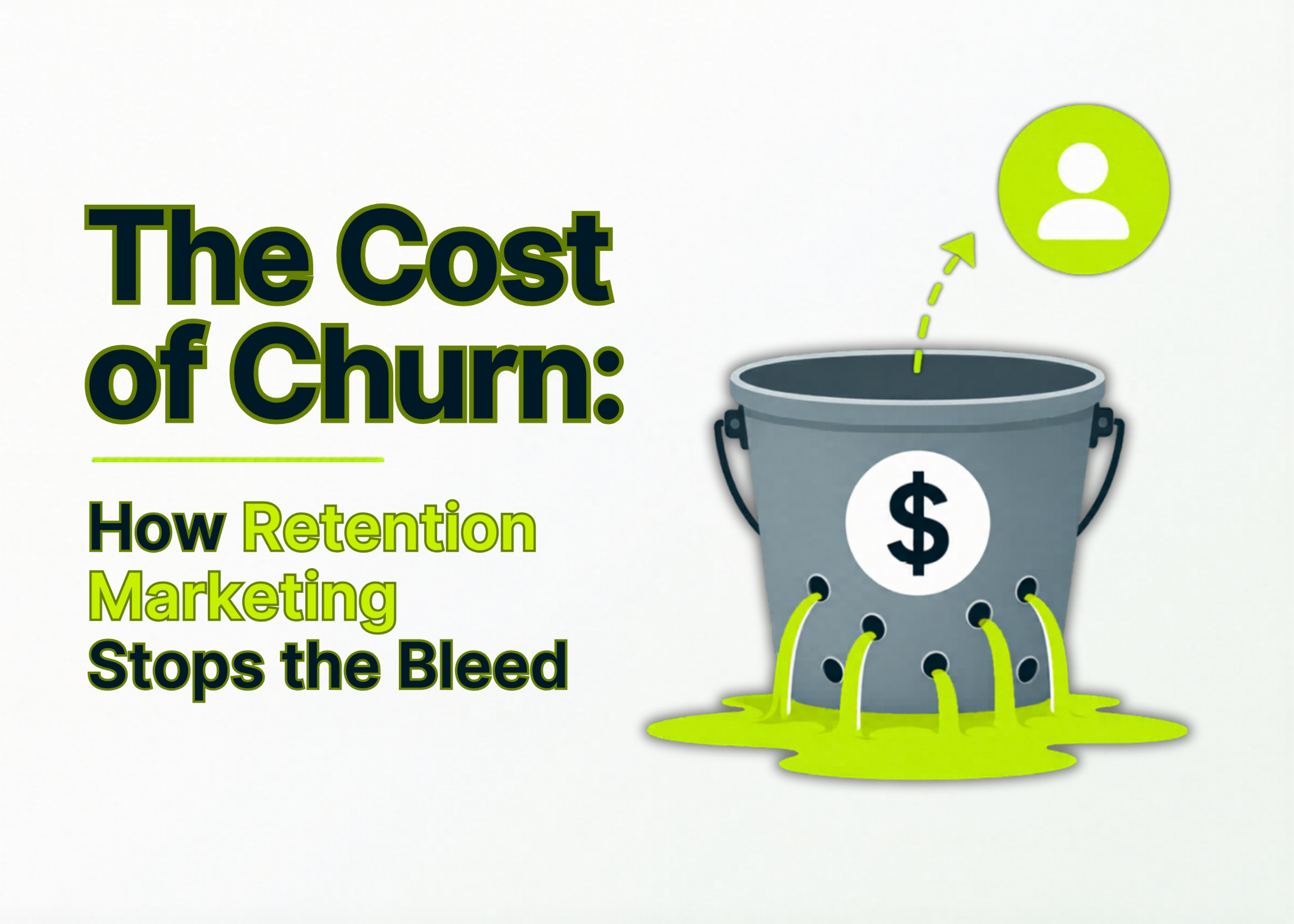
The Cost of Churn: How Retention Marketing Stops the Bleed
There's a silent problem draining the revenue of most businesses. It's not a competition. It's not the economy. It's fuelled the steady loss of customers who leave without saying why. Here's what it's really costing you and what retention marketing does to stop it.

The Silent Revenue Killer: Understanding Churn
There's a problem quietly eating into the revenue of most businesses, and it isn't competition, economic pressure, or even product quality. It's churn, the steady, often invisible loss of customers who stop buying, stop engaging, and eventually stop returning.
What makes churn particularly dangerous is that it doesn't announce itself. You don't get a notice from a customer who stops opening your emails or switches to a competitor. You simply stop seeing them. And by the time the revenue gap is visible in your reporting, dozens, sometimes hundreds, of customers may have already walked out the door.
The average business loses around 20% of its customers every year. That's one in five. And the cost isn't just the next missed sale. It's every sale that a customer would have made across their entire relationship with your brand. Every referral they would have sent. Every positive review they might have left.
Consider the maths: acquiring a new customer costs five times more than retaining an existing one. If your business is constantly churning and replacing customers, you're running on a treadmill, spending heavily to maintain your position while never building the compounding value of a loyal, growing customer base.
Flip that equation: a 5% improvement in retention rates can increase profits by 25% to 95%. That's not incremental improvement. That's transformation. And it comes not from finding new customers, but from properly serving the ones you already have.
Why Customers Really Leave (It's Not What You Think)
Most businesses assume they lose customers because of price or product quality. The data tells a different story.
Customers leave when they feel disconnected when the brand that courted them so passionately before the first purchase suddenly goes silent or generic afterwards. When a promotional email arrives that could have been sent to anyone on earth, when they reach out for help, and feel like a ticket number rather than a person.
There's an irony at the heart of most marketing strategies: businesses pour their most creative, generous, and well-resourced efforts into acquisition campaigns designed for people who haven't yet decided to trust them while treating existing customers like a passive audience for occasional broadcasts.
Existing customers feel this imbalance. They notice that when new customers get the best welcome offers, the most attention, and the most compelling messaging. They notice when their loyalty goes unrewarded. And quietly, they start looking elsewhere.
Retention marketing corrects this imbalance. It starts from the premise that your existing customers are your most valuable asset and that every interaction after the first sale is an opportunity to deepen the relationship or risk losing it.
The good news: most churn is preventable. Customers rarely leave in a single dramatic moment. They drift, gradually engaging less, responding less, spending less until one day they simply stop. The window for intervention is long, but only if you're paying attention.
The Retention Marketing Playbook
Effective retention marketing isn't a single tactic. It's a connected system of strategies that work together to keep customers engaged, appreciated, and returning.
Personalised, Multi-Channel Communication
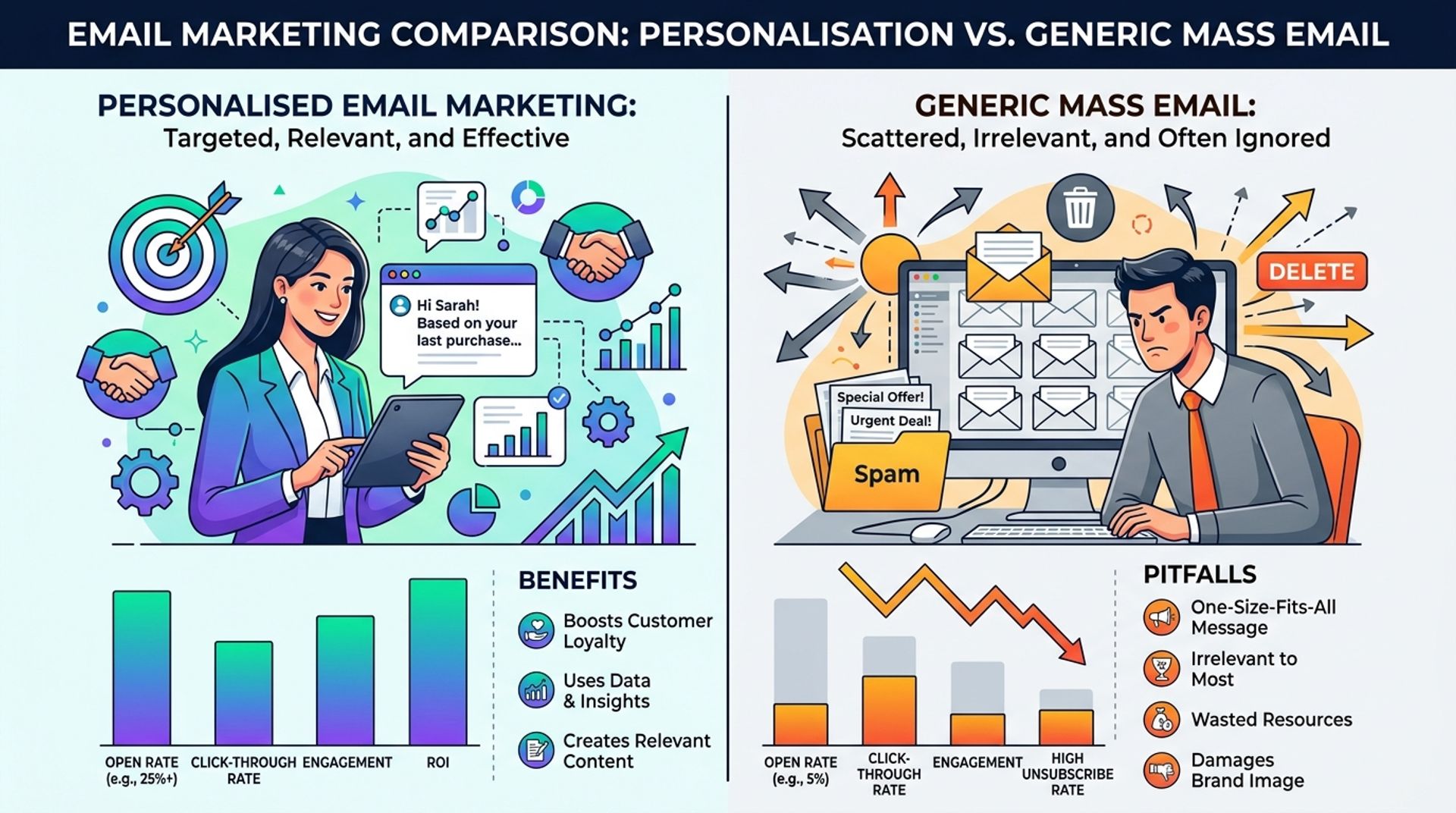
Meeting customers where they actually spend time is fundamental. Whether that's email, SMS, social media, push notifications, or a branded app, the key is showing up consistently and relevantly. A customer who bought running shoes doesn't need a message about your formal collection. They might be very interested in the socks, insoles, or fitness accessories that complement what they already bought. That's what personalised retention communication looks like: relevant, timely, and unmistakably designed for that individual.
Loyalty Programs That Earn Real Loyalty
A well-designed loyalty program does more than offer discounts. It creates a reason to return, a goal to work toward, and a feeling of being genuinely recognised. The best programmes reward customers not just for purchases but for the full range of engagement reviews, referrals, social shares, anniversary milestones, and community participation. Tiered programmes are especially effective: when customers can see that spending or engaging more unlocks better rewards, they have a tangible reason to stay committed.
Proactive Outreach, Before They've Already Gone
Don't wait for customers to come back on their own; invite them. Post-purchase follow-ups, loyalty milestone emails, and win-back campaigns for customers who've gone quiet are all powerful tools. The key is timing: reach out before someone has fully decided to leave, not after they've moved on. A well-crafted re-engagement campaign sent at the right moment can recover customers who were on the verge of lapsing, customers who likely would have been permanently lost without it.
Surprise and Delight
Some of the most powerful retention moments cost very little. An unexpected thank-you note. A small credit on a customer's anniversary with your brand. A proactive resolution to a problem before they even have to complain. These moments create emotional loyalty that transactional incentives simply can't replicate. When customers feel genuinely cared for, not just marketed to, they don't just stay. They tell others.
Customer Feedback as a Retention Tool
Asking customers for their opinions isn't just research; it's a retention strategy in itself. People who are asked for feedback feel heard. And when you act on that feedback visibly, you demonstrate that the relationship is a genuine two-way exchange. Surveys, review requests, and follow-up conversations after service interactions all serve this purpose.

Building a Retention Culture Across Your Business
Retention marketing works best when it isn't siloed in one department. Its most powerful form is a shared organisational value, where product, service, marketing, and leadership all understand that keeping customers is as strategically important as winning them.
This mindset shift changes everything. It means designing products that make ongoing use easy and enjoyable. Training service teams to anticipate needs rather than just resolve complaints. Marketing to existing customers with the same creativity and budget discipline you apply to acquisition. And measuring the health of your customer base with the same rigour you apply to your top-of-funnel metrics.
The businesses that build this culture don't just reduce churn. They create something more durable: a customer base that grows through loyalty and genuine word of mouth, sustained by real relationships rather than advertising spend.
At Exovate Digital, we help businesses of all sizes identify where churn is happening, understand why, and build the retention systems that fix it, from CRM strategy and email automation to loyalty design and post-purchase experience. If your existing customers deserve better than they're currently getting, that's the place to start.

Key Takeaways
- The average business loses approximately 20% of its customers every year, often without knowing why.
- Acquiring a new customer costs five times more than retaining an existing one.
- Customers most often leave because of disconnection and feeling undervalued, not price or product.
- Existing customers are frequently neglected while acquisition campaigns focus all creative energy on new prospects.
- Personalised, multi-channel communication is one of the highest-impact retention tools available.
- Loyalty programs, proactive outreach, and surprise-and-delight moments build emotional loyalty that discounts alone cannot.
- Retention marketing is not a single tactic, it is a connected system of strategies working together.